
Yesterday’s favorite yogurt is untouched. The toast is wrong because it is cut into squares. The strawberries that disappeared at Grandma’s house have become suspicious at home.
This is not proof that your child has “lost another food.” Children’s preferences shift, and the details around a food can matter. An accepted-food list is useful precisely because memory is bad at holding those details — especially when several adults feed the same child.
The list below is not a treatment plan, a nutrition assessment, or a promise that a food will be eaten tonight. It is a practical family note: what your child is eating lately, what is hit-or-miss, and what may be worth offering again without pressure.
One “yes” list is too blunt
“My child eats pasta” sounds clear until dinner arrives. Was it plain penne, warm but not hot, in the blue bowl? Or spaghetti with sauce mixed through? Those are different experiences for a child, even when an adult sees one ingredient.
Use three headings:
| Status | What it means in your home | What to do with it |
|---|---|---|
| Eats now | Eaten more than once in recent, ordinary meals. | Use it as one familiar part of meal planning, not as the whole meal. |
| Sometimes | Eaten in some settings, preparations or moods, but not reliably. | Keep the useful context beside it. No persuasion required. |
| Paused | Previously eaten, then declined during the last few offers. | Keep it visible and consider offering a small portion again later, without fanfare. |
These are household labels, not clinical categories. Choose a definition that your family can apply consistently and write it at the top. The point is to stop arguing from memory: “But you loved this last week” becomes “This one is in sometimes right now.”
Do not add a fourth list called never. A food can remain paused for a long time, but the label does not need to predict the future. The NHS notes that children’s tastes change and that a food refused now may be accepted later; the CDC likewise notes that children may refuse foods they used to like.
“Toast” may not be specific enough
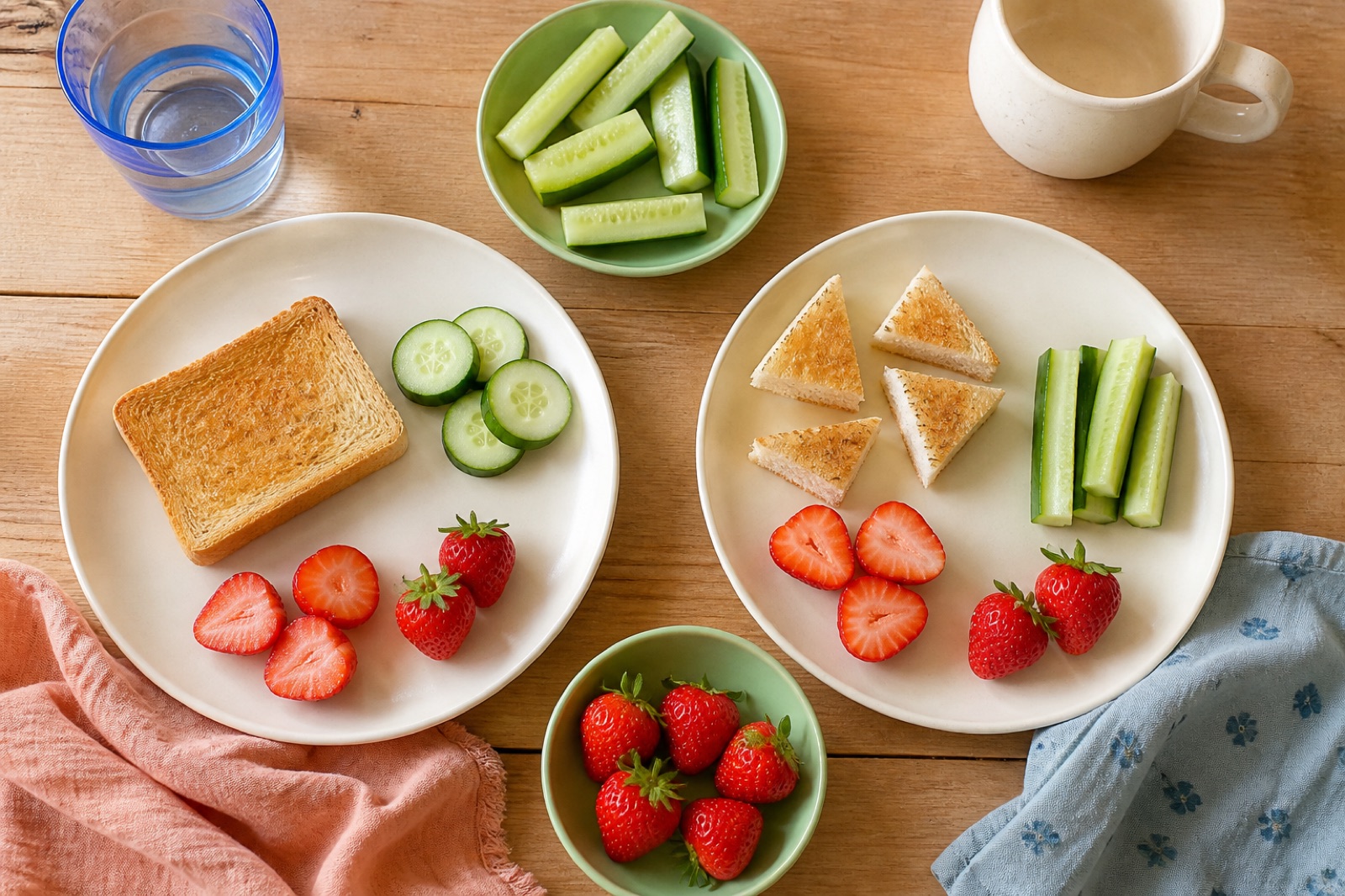
Clinical feeding intake forms often ask about texture, flavor, brand or container, preparation, temperature, shape, color and utensils. That does not mean every preference is a medical issue. It does show why a useful entry is often more specific than the food name.
Write only details you have actually noticed:
| Too broad | More useful | Why |
|---|---|---|
yogurt |
plain Greek yogurt; cold; small bowl |
Separates the food from one successful setup. |
pasta |
plain penne; warm; sauce beside it |
Preparation and mixed textures may matter. |
apple |
peeled thin slices; sometimes whole at daycare |
Captures both form and setting. |
chicken |
roasted thigh at Grandma's; nuggets at home |
Avoids pretending every version is interchangeable. |
Brand belongs in the note only when a different brand has genuinely made a difference. The same goes for plates, cups and seats. You are collecting clues, not building a ritual that the family must reproduce forever.
For babies and younger children, serving size, shape and texture also affect choking safety. Use current age-appropriate guidance and your clinician’s advice for those decisions; an accepted-food list cannot determine what is safe.
Build the first version in ten minutes
Do not begin at the supermarket. Begin with the last two weeks.
- Open recent meal notes or photos. If you do not have any, use the seven-day food diary first.
- Ask the other adults one concrete question: “What did you actually see them eat?” A daycare menu shows what was offered, not necessarily what was eaten.
- Add foods and ordinary mixed dishes, not just ingredients.
Cheese quesadillamay be more useful than separate entries for tortilla and cheese. - Put uncertain memories in sometimes. There is no prize for a longer eats now column.
- Stop after ten minutes. The next real meal can correct the list.
Here is a believable first version:
| Eats now | Sometimes | Paused |
|---|---|---|
| Toast, lightly browned, triangles | Scrambled egg, very soft | Banana |
| Plain penne, warm | Strawberries, sliced | Peas |
| Cucumber sticks | Chicken from Grandma’s roast | Oatmeal |
| Vanilla yogurt, two familiar brands | Cheese quesadilla at daycare | Avocado |
Notice what is missing: ratings, calories, “good” foods and “bad” foods. This list answers a planning question. It does not tell you whether the overall diet meets your child’s needs.
Use the list without letting it shrink the menu
An accepted-food list can reduce the 5:45 p.m. panic. It can also accidentally make meals narrower if it becomes a rule that only listed foods may appear.
A calmer use looks like this:
- Include one familiar food at a meal when practical, alongside the rest of the family meal. The American Academy of Pediatrics recommends including a food the child likes while allowing the child to choose what and how much to eat.
- Use a known food as a clue, not camouflage. If smooth pumpkin is accepted, a similar color, flavor or texture might suggest another low-pressure option. The AAP calls these food bridges.
- Offer a tiny amount of something less familiar when it suits the meal. The CDC recommends serving new foods with familiar ones and allowing repeated opportunities.
- Treat a refusal as ordinary. Pressure, punishment and bribery can turn the food into a bigger conflict than it needs to be.
The goal is not to graduate foods from paused to eats now. It is to make everyday decisions with less guessing while your child still has low-pressure chances to see, smell, touch or taste a wider range of food.
Review monthly, without chasing every change
Daily editing makes normal appetite changes look dramatic. A monthly five-minute review is usually enough for a family tool.
Move a food when a pattern has changed, not because of one bite or one refusal. Add a short date to the note if it helps: banana — paused, August. Keep old entries rather than deleting them; seeing that preferences move in both directions can be reassuring and useful in a professional conversation.
You can ask three questions:
- Which foods have been eaten in more than one place or form?
- Which “eats now” items actually depend on a detail we have not written down?
- Has the overall range become noticeably narrower, or are foods simply moving around?
Public-health guidance also recommends looking beyond a single day. The NHS suggests considering what a child eats across a week, because one difficult Tuesday can give a distorted picture.
When the list should go to a professional
An accepted-food list is not a way to diagnose typical picky eating, a feeding disorder, an allergy or a nutrient deficiency. Bring it to your child’s pediatrician or a qualified feeding professional if you are worried about growth, hydration, pain, choking, coughing or difficulty swallowing, frequent gagging or vomiting, nutritional adequacy, or a diet that is becoming very restricted or disrupting daily life.
Do not wait to make the list tidy before asking for help. For breathing trouble, a serious allergic reaction or another emergency, seek emergency care.
Keep the useful history, lose the spreadsheet
KidEat can hold quick meal notes and plate photos in Telegram, keep each child’s entries separate, and add school or kindergarten context. That gives a family enough history to build an accepted-food list without maintaining another elaborate tracker. Its nutrition estimates are approximate and are not medical advice; the public methodology page explains those boundaries.
Source notes
Written by the KidEat editorial team and last checked on 15 August 2026. This article is educational, not medical advice.
- CDC: Tips to Help Your Picky Eater
- AAP/HealthyChildren: How do I help my picky eater try more healthy foods?
- AAP/HealthyChildren: 10 Tips for Parents of Picky Eaters
- NHS: Fussy eaters
- University of Rochester Medical Center: Pediatric Feeding Disorders Program intake form
Questions parents often ask
How many accepted foods should a picky eater have?
There is no universal number that makes a home list good or bad. The useful question is whether the range is changing and whether it supports everyday life; discuss adequacy concerns with a qualified professional.
Does a food stay on the accepted list forever?
No. Acceptance changes with preparation, place, mood and time. Treat the list as a current planning tool and review it periodically rather than as a permanent label.
Should I record brands and serving details?
Only when they matter. If a child accepts one texture, temperature, container or preparation but not another, that detail is more useful than the food name alone.