

If you have ever made three different breakfasts before 8 a.m., you do not need another person telling you to “just offer more variety.” You need one small way to see what has actually been happening.
A short picky eater food diary can turn a blur of snacks, school lunches and half-eaten dinners into a clearer picture. It is useful when you want to notice patterns yourself, share a calm summary with another caregiver, or prepare for a conversation with a clinician. It is not a way to judge your child, count every bite, or diagnose a feeding problem.
What a food diary can do — and what it cannot
The useful question is rarely “Did my child eat perfectly today?” It is more often:
- Did they eat more easily at one time of day?
- Is there one texture, temperature or way of serving food that helps?
- Did a familiar food beside something new make the meal feel less tense?
- Are school or daycare meals filling a gap that is easy to forget at home?
That is why a diary needs a little context, not a spreadsheet. Many young children go through a selective phase, and an unfamiliar food may take repeated, low-pressure chances before it becomes acceptable. The CDC’s picky-eater guidance and AAP advice for parents both encourage patient, repeated exposure rather than turning the table into a battle.
Your notes cannot tell you whether a child has an allergy, a nutrient deficiency or a feeding disorder. They can, however, give you a much less fuzzy starting point if you need to talk with a pediatrician, dietitian or feeding specialist.
Why seven days is usually enough to start
One Tuesday can be misleading. There may have been a bad nap, a birthday at daycare, a long car ride, a cold, or simply a day when toast was the only acceptable answer. A week gives ordinary life time to show up.
Seven days is also short enough to finish. The goal is not to become your child’s full-time data collector. Write a few words after each meal if you can; fill in the rest in the evening if that is more realistic. A partial diary is still useful.
The smallest set of notes that helps
Start with five fields. They fit in a paper notebook, a phone note, or a diary such as KidEat.
| Write this | A plain example | Why it helps |
|---|---|---|
| When and where | 7:40, kitchen / 12:15, daycare |
Routines and setting can matter as much as the food. |
| What was offered | toast, egg, strawberries |
This is different from what was eaten. |
| What happened | ate toast; touched egg; pushed berries away |
“Not yet” is a valid result. |
| Tiny context | very tired after preschool / wanted the blue plate |
Note only what feels relevant; no need to narrate the whole day. |
| Drinks | water with breakfast; milk at daycare |
Drinks are easy to lose track of when care is shared. |
If you have the energy, add one optional field: what seemed to help. It might be “food cut into small pieces,” “sat next to cousin,” “no pressure,” or “same sauce as usual.” This is often more useful than an exact calorie number.
For babies and younger toddlers, food safety and developmental readiness matter. Keep those decisions with your clinician and trusted public-health guidance, such as the CDC’s starting-solid-foods information, rather than trying to solve them from a diary.
A day that looks like real life
Here is the kind of note that is more helpful than a polished meal plan:
| Moment | Brief note |
|---|---|
| Breakfast | Oatmeal with banana and yogurt. Ate banana and a few spoonfuls of oatmeal. Drank water. |
| Daycare lunch | Pasta, peas, chicken according to the menu. Caregiver said the pasta was eaten; no detail on the rest. |
| After-school snack | Crackers and cheese. Ate both quickly, very hungry. |
| Dinner | Rice, cucumber, salmon. Ate rice and cucumber; smelled salmon, then said no. Calm meal, no bargaining. |
There is no verdict at the bottom of this day. There is simply a useful picture: a hungry after-school window, familiar carbohydrates accepted across the day, cucumber comfortably present, and fish not yet welcome. After several days, a parent may choose to offer fish again in a smaller, low-pressure way — or simply bring the pattern to a professional if there is a concern.
What to notice after the week
Read your notes once, preferably when nobody is hungry. Circle just one or two patterns.
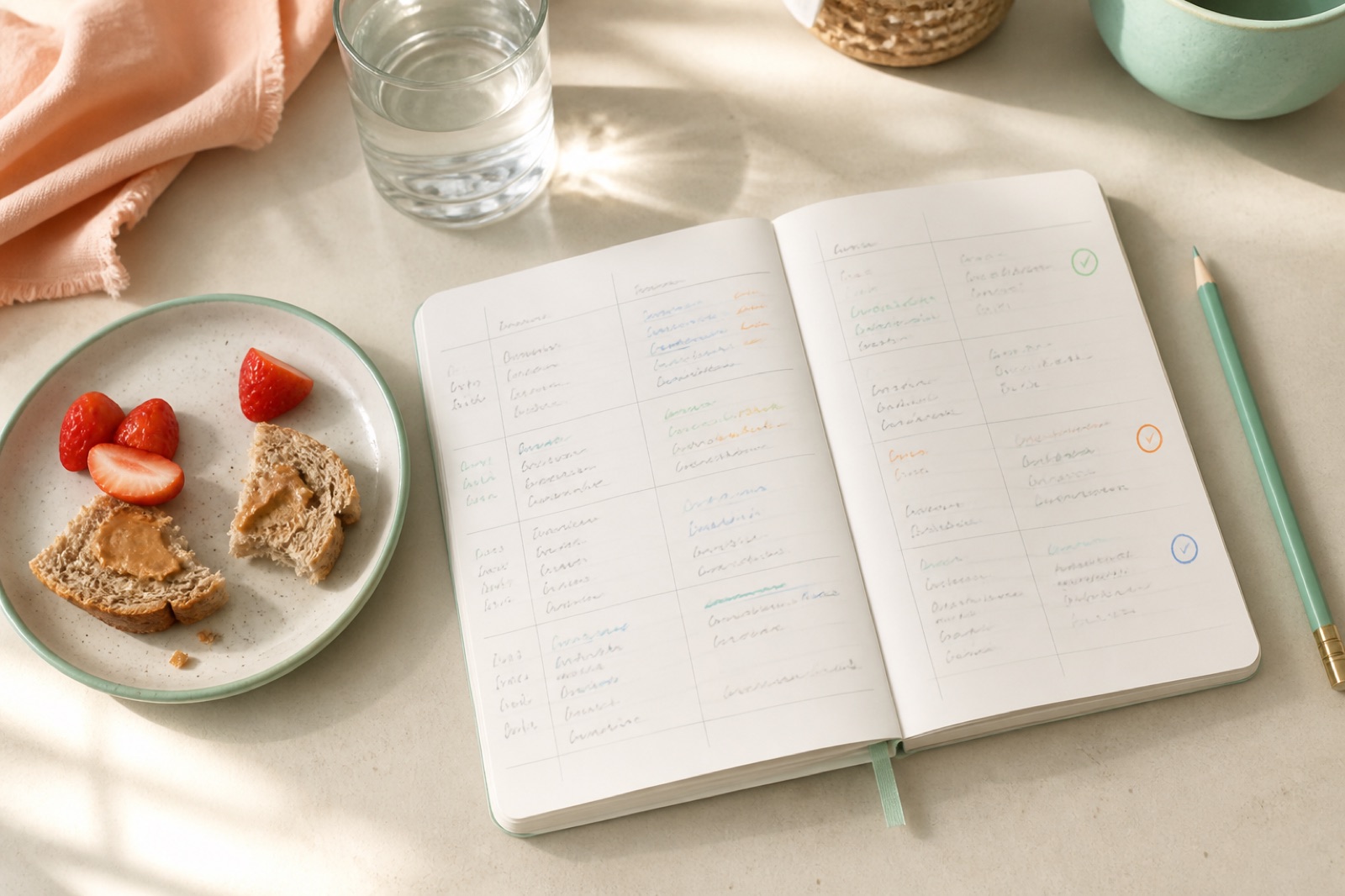
You might notice that breakfast goes better before screens are on, that a child eats more at daycare than you expected, or that one accepted food keeps appearing in a slightly different form. You may also notice that there is no clear pattern at all. That is still useful: it means you do not have to make a big change based on one difficult meal.
Try a small next step rather than a grand plan:
- Keep one familiar food on the plate with one small new or less familiar food.
- Repeat a calm routine that worked — the same chair, time or serving style.
- Share the week with the other adults who feed your child, so nobody has to guess from scratch.
- Continue for another week only if it answers a question you genuinely have.
The CDC notes that children can eat different amounts from day to day and do not need to finish everything on the plate. Its mealtime-routines guidance is a good reminder that predictable meals and snacks can be more helpful than pressure.
When a diary should lead to a conversation, not more tracking
Do not wait for a beautifully completed log if you are worried. Contact a clinician or qualified feeding professional promptly for concerns about growth, dehydration, choking, an allergic reaction, pain, swallowing, or a very restricted diet that is affecting daily life. For an allergic reaction, breathing trouble or another emergency, seek emergency care rather than using a food diary.
For a non-urgent appointment, take the diary as a starting point. A clinician can decide what information matters next; you do not need to interpret it yourself.
If paper notes keep disappearing
The best diary is the one a tired adult can keep. KidEat lets a parent write a quick meal note or send a plate photo in Telegram, keep each child’s record separate, and include school or kindergarten menu information beside meals at home. The estimates are approximate; entries can be edited, and the point is still the pattern, not a score.
Source notes
Written by the KidEat editorial team and last checked on 15 August 2026. This article is educational, not medical advice.
- CDC: Picky Eaters and What to Do
- CDC: Tips for Mealtime Routines
- AAP/HealthyChildren: Tips for Parents of Picky Eaters
Questions parents often ask
How long should I keep a picky-eater food diary?
Seven ordinary days is a practical first pass: long enough to include different routines, but short enough to finish. Continue only if another week will answer a specific question.
Do I need calories or exact portion weights?
Usually not for a parent-run pattern diary. Record what was offered, what happened, rough amounts when useful and the surrounding context. Follow a clinician's form if they request something more specific.
Can I bring the diary to a pediatrician?
Yes. It can make examples easier to discuss, but it is only one part of an assessment. Do not delay asking for help while trying to make the diary complete.